Precision Restoration for Worn Bearing Surfaces
Shaft Repair in Lake Charles for motors, pumps, and rotating equipment with damaged or undersized shafts
Shaft journals wear from bearing friction, gall from contamination, or score from seal debris, and undersized or damaged surfaces allow bearings to spin, seals to leak, and couplings to slip under load. Portable Machine Services restores worn shafts through precision machining that removes damaged material, re-establishes cylindrical geometry, and sizes the journal for standard or oversize bearings that return the assembly to proper clearances. The work is performed on-site using portable lathes, eliminating the cost and delay of pulling motors, pumps, or gearboxes and shipping them to machine shops.
Shaft repair involves mounting the equipment securely, indicating the shaft to locate runout and wear patterns, machining the journal to the next bearing size, and finishing the surface to the required smoothness for bearing life and seal contact. Motors, pumps, fans, and gearboxes in refineries, processing plants, and industrial facilities are common applications where shaft restoration prevents full equipment replacement.
Request an evaluation to measure shaft wear and identify whether machining, sleeving, or replacement is the most cost-effective approach.
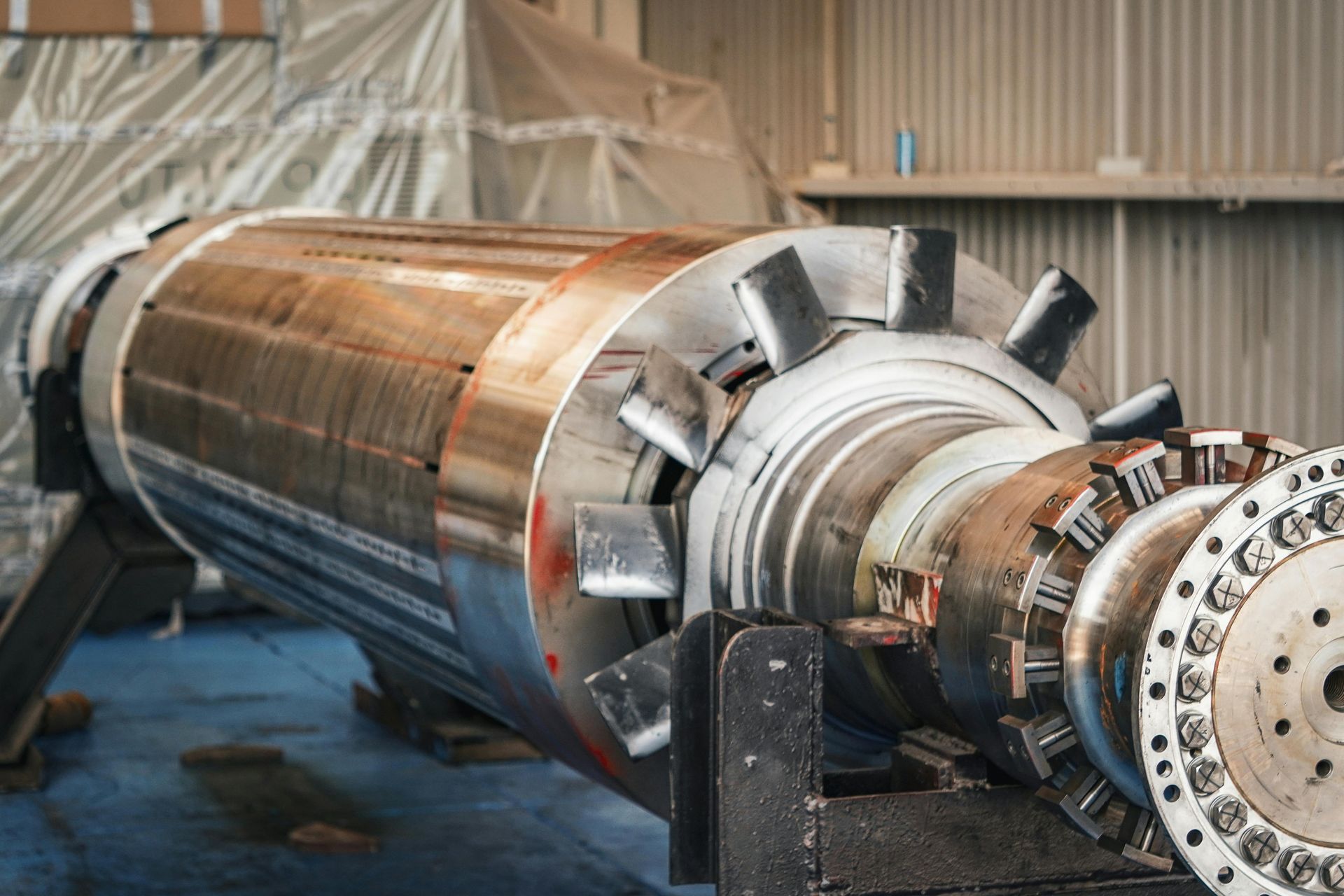
What Proper Shaft Repair Requires
Proper shaft repair requires precise material removal to restore straightness, eliminate taper, and achieve the diameter tolerance that allows bearings to support the shaft without excessive clearance or interference. Portable Machine Services uses digital measurement tools to verify dimensions throughout the machining process, and finishes the journal to a surface smoothness that prevents premature bearing wear and ensures seals track the shaft without leaking.
Once the repair is finished, bearings fit snugly on the journal without radial play, seals contact a smooth, concentric surface that prevents fluid migration, and the shaft runs without vibration or noise caused by uneven bearing support. Equipment that was generating heat at bearing housings or leaking oil from worn seal surfaces operates reliably again, and bearing life returns to expected intervals rather than failing prematurely from poor shaft condition.
Shaft repair addresses journal wear and surface damage, but it does not correct bent shafts, repair keyways that have been elongated or cracked, or rebuild splines. Those conditions require additional machining, welding, or shaft replacement depending on the severity and location of the damage.
What Property Owners Usually Ask
Industrial operators and maintenance teams across Lake Charles often choose shaft repair when replacement lead times threaten production schedules or when the cost of a new shaft and associated downtime exceeds the cost of precision restoration.
What types of shaft damage can be repaired instead of requiring full replacement?
Journals that are worn undersize, scored from debris, galled from bearing contact, or corroded from moisture exposure can be machined to the next standard bearing size, provided enough base material remains to maintain structural integrity.
How does on-site shaft repair reduce costs compared to replacing the entire assembly?
Machining the shaft to accept an oversize bearing costs a fraction of a new motor or pump, eliminates rigging and transportation, and avoids the downtime of disassembling systems, shipping components, and waiting for shop schedules or parts availability.
Why do some shafts wear unevenly even when bearings are replaced regularly?
Misalignment between motor and driven equipment, contamination in lubrication systems, or inadequate bearing preload cause uneven contact and accelerate wear in localized zones, which machining addresses by restoring uniform diameter and concentricity.
When is sleeving a better option than machining the shaft down to the next bearing size?
If the shaft is already near minimum diameter or if the journal has been repaired previously and further material removal would weaken the shaft, a press-fit sleeve restores the surface without reducing shaft strength.
What measurements determine whether a worn shaft is repairable or must be replaced?
Shaft diameter is measured at multiple points to assess taper and wear depth, then compared to the minimum safe diameter for the shaft's load and speed, ensuring enough material remains after machining to prevent fatigue failure.
Portable Machine Services machines shafts on-site across South Louisiana's industrial facilities, restoring equipment to service without the expense or delay of full replacement. Call (337) 523-1430 to arrange inspection and repair services for motors, pumps, and rotating equipment with worn bearing surfaces.