Accurate Holes for Structural and Machinery Repair
Drilling, Tapping and Reaming in Lake Charles for structural steel, fixed machinery, and equipment requiring precision hole creation
Repairing broken bolt holes, adding mounting points to fabricated structures, or correcting misaligned fastener holes requires precision that hand drills and portable tools can't achieve on large or fixed equipment. Portable Machine Services performs on-site drilling, tapping, and reaming using magnetic drill presses and precision tooling that produce straight, accurately sized holes in structural steel, machinery frames, and industrial equipment without removing components from service locations. The work ensures fasteners fit properly, threads engage fully, and mating surfaces align without forcing parts together or relying on oversized hardware that weakens connections.
The process involves securing the drill base to the workpiece, selecting the correct cutting tool and speed for the material, and machining the hole to final size with controlled feed rates that prevent tool wander or oversized bores. Tapping follows with spiral flute taps that clear chips and produce clean threads, and reaming finishes holes to exact diameters when tight tolerances are required for pins, dowels, or precision bolts.
Contact us for project quotes and field service to address hole creation, thread repair, or alignment corrections on structural and machinery assemblies.
What Changes After Precision Hole Finishing
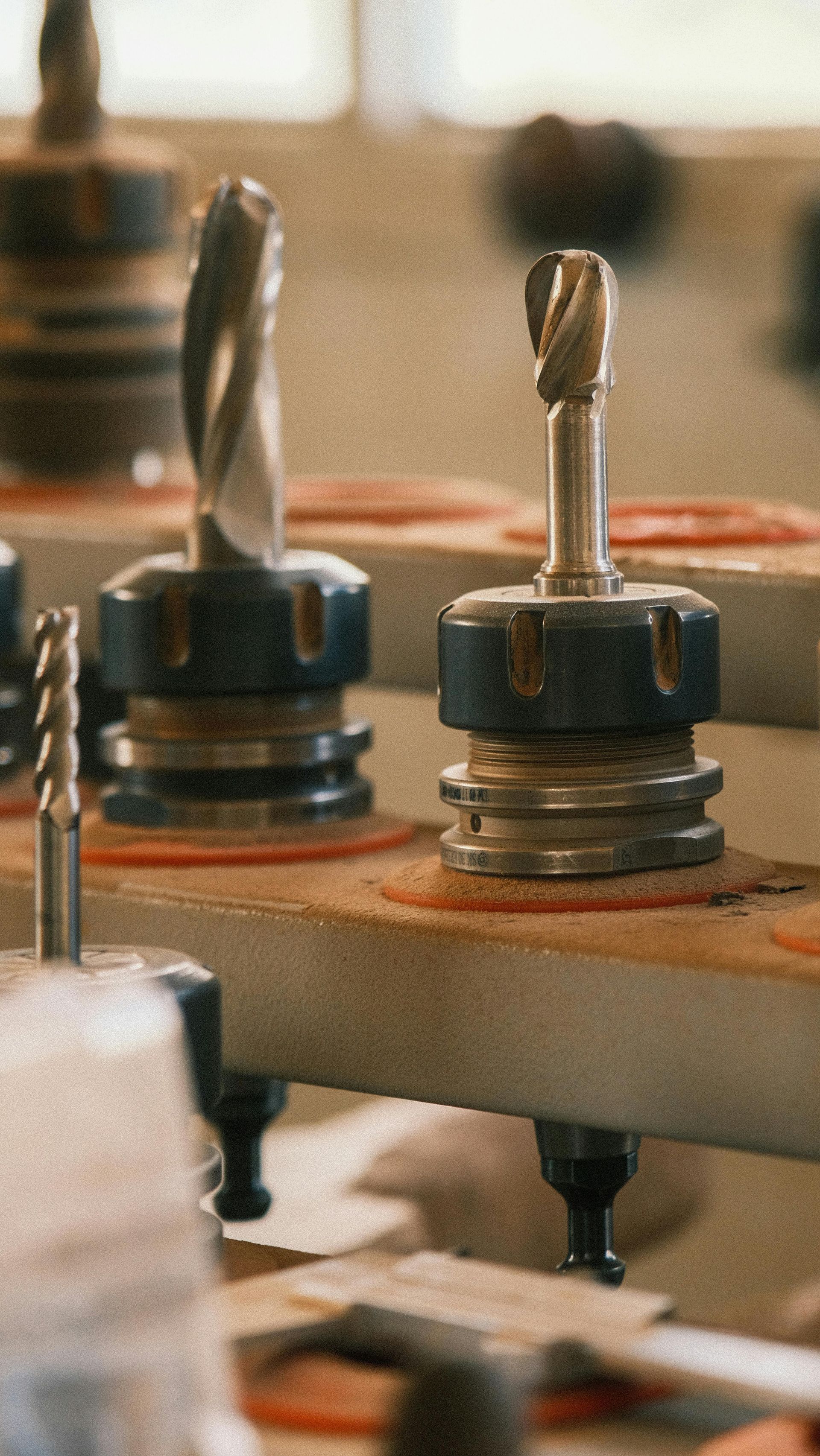
Drilling with magnetic-base equipment produces holes that are perpendicular to the surface, concentric with mating features, and sized within tolerance for the intended fastener or component. Tapping creates threads that allow bolts to torque properly without cross-threading or stripping, and reaming removes irregularities left by drilling to create a smooth bore that accepts pins or dowels without interference or slop.
After the work is complete, fasteners install without binding or requiring force, bolted joints torque to specification and distribute clamping load evenly, and mating parts align without shimming or slotted holes that allow movement under load. Equipment that had stripped threads, misaligned mounting holes, or loose connections becomes secure and operates without vibration or fastener failure.
This service handles hole creation and finishing in steel, cast iron, and some aluminum alloys. It does not include welding to fill damaged holes before re-drilling, structural modifications that require engineering review, or work on hardened materials that exceed standard tooling capabilities.
Questions Before Starting Your Project
Contractors and plant maintenance teams across Lake Charles and surrounding industrial areas use precision drilling and tapping when field repairs demand accuracy that portable hand tools cannot deliver reliably.
What applications require drilling and tapping instead of standard hand tools?
Any situation where hole location, perpendicularity, or thread quality affects structural integrity or equipment function, including frame repairs, pump base mounting, coupling alignment, and bracket installation on machinery that cannot be moved to a shop.
How does magnetic-base drilling improve accuracy compared to handheld drills?
The magnetic base anchors the drill firmly to the workpiece and guides the cutting tool in a fixed axis, eliminating tool wander, angled holes, and oversized bores caused by operator variability and vibration from handheld equipment.
Why is reaming necessary after drilling for some fastener applications?
Drilling leaves a slightly rough, undersized bore that varies along its depth, while reaming removes a few thousandths of an inch to produce a smooth, cylindrical hole with precise diameter and straightness required for tight-fitting pins, dowels, or precision bolts.
When should threads be tapped on-site rather than using threaded inserts or weld nuts?
Tapping directly into base material provides stronger, more reliable threads when material thickness and hardness are adequate, and avoids the added cost and potential failure points of inserts or secondary fastening methods.
What material thicknesses and hole sizes can be drilled and tapped in the field across South Louisiana job sites?
Magnetic drills handle steel plate from 1/4 inch to several inches thick, and hole diameters from 1/4 inch to over 2 inches depending on material hardness and available drill motor capacity.
Portable Machine Services machines shafts on-site across South Louisiana's industrial facilities, restoring equipment to service without the expense or delay of full replacement. Call (337) 523-1430 to arrange inspection and repair services for motors, pumps, and rotating equipment with worn bearing surfaces.